
Mine! Mine! Mine!
- Feb 4
- 6 min read
Saturday 24 January
A big day on the west coast - we had booked to go on the “Outwest” tour of the Stockton Mine and showed up promptly at 8.45am armed with cameras, packed lunch (including Wild Meat Pies), long sleeves, long trousers, heavy shoes and many, many spare layers!


Micky picked up about 12 of us in the Unimog, glammed us all up with fluro vests and safety helmets, and we headed for the hills. This amazing trip is part goodwill gesture, part education and part propaganda on behalf of Bathurst Mining Company.
We spent the day on the open cast mine learning about the heritage of the place, the immense trucks and vehicles that work there, the mining of some of the worlds finest coal & anthracite, the hardships of the jobs and the effort put into rehabilitation of the area once the coal has been extracted. We left at 9am and the tour got cut short at 1.45pm when the clouds enshrouded us and the rain pelted down… all that adventuring for just $20 each!


First stop was just outside Granity at the base of the arterial ropeway - coal comes down the hill from 600+ metres above sea level in giant gondola buckets, is stored in graded piles and loaded onto trains (4 times a day on week days) to be delivered to Lyttelton for shipping. Driving up to the mine it was misty up north, but bright where we were as we headed through the “Grand Canyon” up Millerton Road. Entering the mine site there were heaps of signs and warnings all over the place - safety first and every area had road signs, instructions and often the need to radio in to control when you entered and left


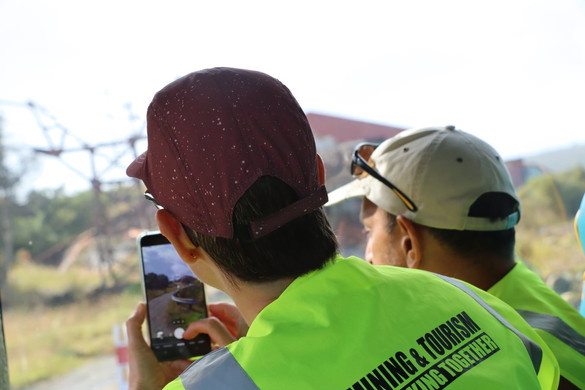
At the op of the aerial ropeway - the coal trucks are filled and descend 600m in height down to the unloading station at sea level below that we had already visited - Nickie got a great picture!
Heading further into the mine, we came round a corner known as Tin Town - back in the day (1936) this bend was lined with tin shacks for the workers, there was a whole township built around the mine, but NO pub as they’d learnt from other mines of the dangers that brought!!! There was a fab photo of this in the control room.
We stopped at the Control Centre for a toilet break and to get an insight into how the mine works and what it produces. We used the toilets here - mining used to be a man’s job but these days there are many women driving trucks and working on the admin and it seems they are very well looked after. I guess they are working hard on redressing the balance and proving it's not just a man's world!
The gents toilets were through the drying room - it’s a pretty wet business up here on the mine so workers get a hot shower at the end of the shift and leave their jackets and overalls hanging to dry.


In the control centre - or maybe dispatch office, I’m not sure - we learned about how the mine operates and discovered the history… originally pit mining, now open cast, old axe heads, horseshoes and other metal items are often brought up from earlier excavations. The air ventilation map from 1910 when it was the Millerton Mine shows miles and miles of tunnels underground, sometimes two or three levels working one seam. The vibrantly coloured mineral we saw and got to handle was peacock coal - a rare anthracite displaying phenomenal colours due to oxidisation of different minerals.
Next stop left us feeling dwarfed by the rock truck - it can carry about 45tonne of rock or coal - the coal is less dense and requires an even bigger tray on the back. OMG - these things are bonkers huge! Drivers literally walk between the tyres and mud flaps to inspect for damage before driving the trucks. The refuelling truck was just as enormous - they take fuel out to the trucks so as not to disrupt the workflow, and refuel them during lunch and work breaks. That’s Nickie looking tiny next to the front tyre!


With such enormous vehicles, the transporter has to be something special too - constructed to order by a kiwi company - it can carry several of the monster trucks . It had 48 wheels, Russ counted! That's Louis standing in front of the transporter bed!!
The diggers were equally oversized - we were about the same height as the caterpillar wheels and I reckon all 12 of us on the tour could have lined up along the length of the caterpillar wheels, and still had room to spare! Watching the diggers at work in this vast landscape a wee while later, they didn’t look nearly as big as in close up! But they could certainly move tonnes of rock or coal on each scoop.
The mine is vast - over 2300 hectares, the largest opencast mine in NZ. With this impact comes environmental responsibility and they have a big programme of rehabilitation and re vegetation including DVT - direct vegetation transfer which is like rolling out a new lawn on a giant scale! The programme results on the old mining areas looked pretty impressive. The landscape on the right below paints a fascinating picture of how things work - you can see the sea with the coast road below, but the mining is kept below the ridge line so it’s invisible to the public enjoying the coastline & beaches. The area of land on the right is mined ready to break up the top layer of rock next week in a big explosion. The vegetation has been cleared and used to regenerate previous mining areas. And to the left you can see the digger breaking & clearing rocks to reach the coal seam below.

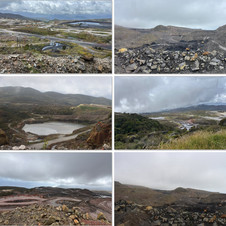



With this fascinating view behind us it would have been rude not to take a selfie, or borrow Mickey's photography expertise for a more official shot.
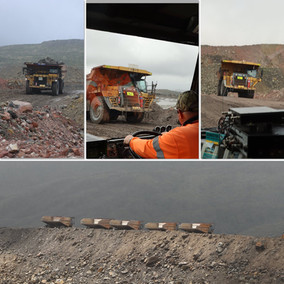
The pics below show the huge diggers and trucks working a seam - some of the coal is at ground level, some up to 50m below ground. The seams are all fragmented by tectonic movement. Several seams caught fire a few decades ago. The fires were eventually contained (with a few further outbreaks) but some are still steamy like this one here … they douse the coal seam with water to prevent it reigniting. But even as the truck pulls away the coal is still steaming. In the montage below you can also see the stone entrance to one of the original mines - the seam this mine went into is much larger than the original miners thought, and the vastness of the seam is now being uncovered by modern technology & equipment.


We met several of the mammoth trucks ferrying rocks and coal around the mine. As new areas are excavated, the rock is tipped into old mines to begin the rehabilitation process. There’s no garage big enough for these monsters so they are just parked up around the plateau when out of action as on a weekend when we visited! The next pic shows a lime silo - the minerals of the coal & anthracite laden mountains make the water very acid so this is countered with lime to neutralise it.



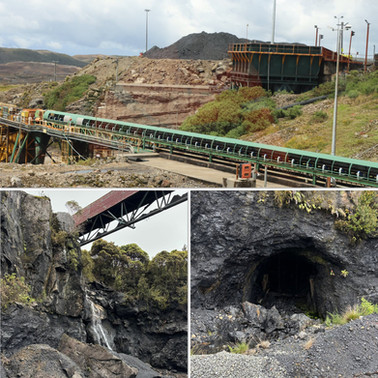


The CHPP (Coal Handling & Processing Plant) was a huge building which we were not allowed inside of. Here the coal is graded and sorted for export before being taken to the arterial ropeway to send down the hill for distribution. Underneath the building it was fascinating to see the cave-like entrance to another old mine shaft.
Heading back to the Unimog from our scenic outlook, sadly we did not get to the summit for a full overview of the mine as the weather closed in. So instead, time for lunch & Louis' Wild Meat pie - B for Bernstone or B for bacon & venison?! Sitting in the staff canteen space, the pounding on the roof got louder and louder. When it rains up here, it absolutely pours - and TBH, you’re already inside the raincloud so it can’t get much wetter! At this point we called it quits and headed back to Westport, snoozing most of the way!
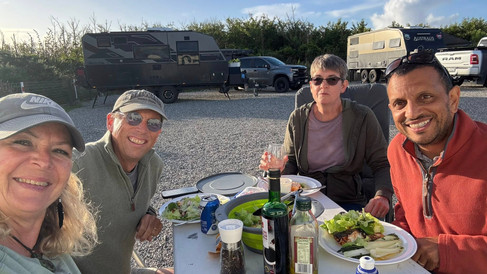
We snoozed again back at the caravans, and waited for the rain to stop then walked up the beach a couple of kms & back before the Fernandi cooked us salmon for dinner and destroyed us at Monopoly Deal & we had another chat with Mike from Leopards Go Wild.





Kia ora Mike - we’ve been following his family adventures on the #LeopardsGoWild FB page and YouTube channel since before we hit the road so it was lovely to finally cross paths!


Comments