
Lessons from the past at Bannockburn Sluicings
- Apr 9
- 5 min read
Thursday 26 March
On our way from Lowburn to Bannockburn the previous day, we’d stopped at the dump station at the same time as a DOC ranger. I asked her for a recommendation for a great short walk locally and she suggested Bannockburn Sluicings so we strapped up my knees, grabbed a bag of fruit leathers for snacks and set off to explore.
Central Otago’s settler history is all about gold and there were many methods of extracting the precious metal. Sluicing involved jets of water being directed onto a gravel slope; the water washes down fine gravel containing gold so that it can be channelled into sluice boxes and recovered using gravity separation (where the heavy gold is trapped at the bottom and the lighter sands are washed away). Using this process, large pits were formed in the landscape as the upper layers of ranges were washed away.


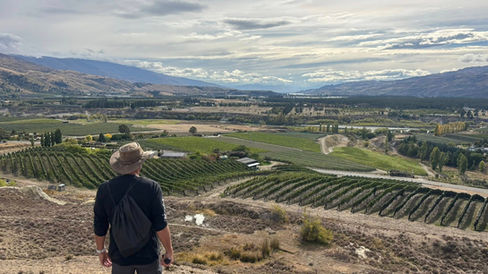
We took the loop track in a clockwise direction - the track wound up onto the main gold field through quartz filled cliffs - behind us were Lake Dunstan beyond the Bannockburn vineyards; ahead of us a large section of the old goldfield & evidence of the sluicings.
We had a lovely smooch with Kimmy - a 4yo Jack Russell with the best ever eye patch - and a chat with her owner before proceeding into this scarred landscape. The height of these escarpments around us indicate the original height of the ranges before the sluicing & gold extraction began! They were like miniature versions of Death Valley!


It was fascinating wandering through this almost alien landscape, full of valleys and crevices worn out by the water, piles of schist & quartz left behind as the gravel between the rocks was washed away, remnants of old dams and water races which channelled the water to the sluicing guns, caves dug to check the environmental structure and for the presence of gold and even a few ruins of cottages. The 1-2 hour walk took us over 3 hours as we stopped to explore everything in detail and took a few detours to see extra bits & bobs - it was absolutely fascinating.
The first old building of schist stone, now in ruins that we came across is believed to be the old smithy - farriers switched from horse shoes to making metal piping to carry the water from the rivers and dams and the iron sluicing guns. We then took a detour to the Flushing Dam - Louis is standing on it below. Looking down on the old Flushing Dam from back on the main path, it is clear to spot the dry stone walling of the actual dam and the stone lined water races cut into the hillside, channeling water to the reservoir created by the dam. Above us was another stone lined water race we could examine in close up - a very skilled piece of infrastructure. Water was a precious resource and could not be wasted through seeping into the soil.


Interesting to see what the land here looks like below our feet - random chunks of schist glued together with sandy, gravelly soil. The gold could be found in the sandy shingle between the rocks. Looking out over one of the larger valleys created by the miners - it was a vast endeavour.
Next stop was Stewart Town - which used to have many buildings, lots of shanty shacks and tents, a few stone houses and some built from mud bricks. Many of the buildings fell into disrepair and the stones and other materials were repurposed for new houses or walls. This building is protected by a new roof, but the stone has held up well over the decades and there is even some plaster at one end. Another method of house building was called “rammed earth” - two frames of wood were created about 4 inches apart and “pugs” of earth were rammed in between them then the wood removed when they were dry… it was not ideal and quite susceptible to heavy rain!


It was amazing to see old heritage fruit still growing in the orchard around the house. I took a few pears off the ground to try later. This wall in the picture above is part of the main big dam in front of Stewart Town; I’m standing where the water once was.
Lots of autumnal flora including rose hips, teasels, skunkweed & thistles up here, but less so in the scarred valleys - there is was mostly wild thyme and vipers bugloss.
The grand canyon of excavations that confronted us beyond Stewart Town was amazing - the land was originally all the same height as the cliffs to the left and the piles of schist were once an integral part of the geology of the land. Sometimes the miners excavated caves into the cliffs to check the structure of the area and see if there was any gold before deciding whether or not to begin sluicing there - many of them still remain.


Same spot, different view in the double montage above - looking up to the cliffs behind and out to the man made valley in front. The triptych shows further examples of the damage done to the land by the gold mining & sluicing.
This really was an object lesson in how precious metal extraction destroys the environment & the natural landscape - even at the relatively low level of mining practiced over a century ago. We both support Sam Neill and other local activists in standing against the proposed Santana open cast gold mine near Tarras - the visit to these sluicings just served to cement our opposition to this proposal.
Back on Felton Road we followed it to its abrupt end - and found one of aforementioned Sam Neil’s vineyards - not that I'm a stalker or anything! We also found the start of the Kawerau Gorge cycle track which we have been admiring every time we drive to Queenstown. Says it’ll be opening soon, but looks like there’s a lot still to complete...


Back at Scottland we had burgers for lunch and I took a stroll around Scottland - Iit’s a funky little campground - Sadie the Washing lady will do your laundry (if you like a cold wash) and the black water dump station is a toilet (wondering how many have sat there and enjoyed the view when nobody else was about!!!)

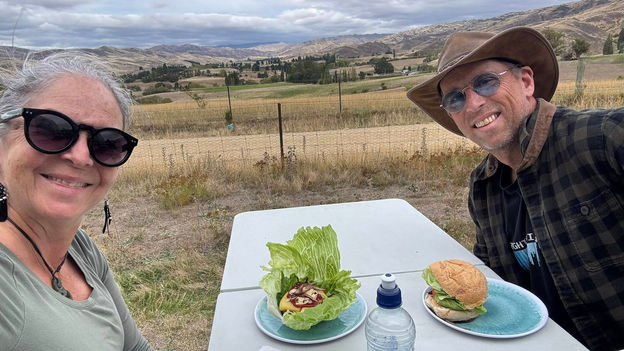


We spent a lovely evening under the awning (raining by now) with Jenny & Warren, fellow Snowy owners who we met a year ago, they picked up their van from Vanari immediately after us back in December 2024 and we first met at Tekapo NZMCA last year!


We had an adorable visit from a wee feral tabby cat - I know they are a pest but wow, those imploring eyes really do melt your heart 🐈


Comments